Trading Position Size Calculator
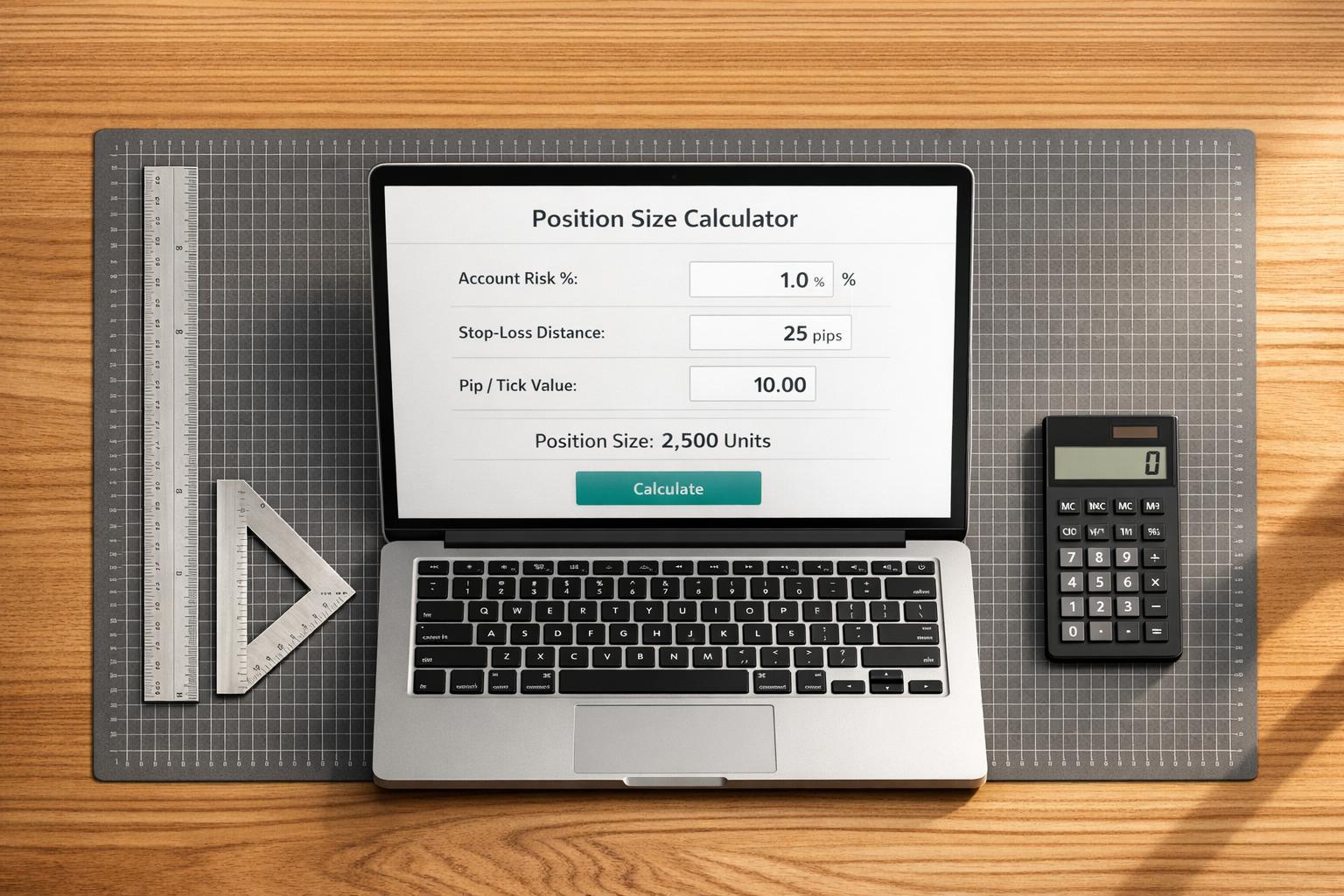
Trading Position Size Calculator
Trade Smarter With Better Risk Control
A Trading Position Size Calculator helps turn risk management into a simple pre-trade step instead of a rough estimate. Rather than choosing a trade size based on instinct, you can calculate exactly how many lots, shares, or units fit your account and risk tolerance. That matters because even strong setups can become costly when position size is out of line with the stop-loss.
Why Position Sizing Matters
Many traders focus on entries and exits but overlook how much they’re putting on the line. A small risk percentage—often 1% or 2% of account balance—can help protect capital through losing streaks and keep emotions in check. With the right numbers in place, a position size calculator makes that process quick and consistent.
Built for Forex and Stock Traders
This tool works for forex pairs, stocks, and other markets where stop distance and value per point matter. Enter your balance, risk percentage, stop-loss, and pip or tick value to get a clear result. If you don’t already know that value, the calculator can help estimate it using price and lot size inputs.
Used consistently, a Trading Position Size Calculator can support steadier decision-making and a more disciplined trading routine.
FAQs
How is position size calculated?
The calculation starts with your risk amount, which is your account balance multiplied by your chosen risk percentage. Then the tool works out how much you would lose per unit, lot, or share if price hits your stop-loss. Position size is simply your risk amount divided by that loss per unit. This keeps your potential loss aligned with your plan instead of guessing trade size.
What if I don't know the pip value or tick value?
That's common, especially when switching between instruments. This tool can offer a secondary way to estimate that value using the instrument's price and lot size. Once that figure is known, the calculator can translate your stop-loss distance into a money amount and determine a position size that fits your risk limit.
Can I use this for both forex and stocks?
Yes. The same risk-based logic applies to both. For forex, traders often use pips, lot size, and pip value. For stocks, the stop-loss is usually entered as a price difference and the result is shown in shares. As long as you can define your account size, risk percentage, and stop-loss distance, the calculator can help you size the trade more responsibly.